Sustainable Architecture Principles: Design That Gives More Than It Takes

Chosen theme: Sustainable Architecture Principles. Welcome to a human-centered exploration of climates, materials, energy, and communities—an inspiring roadmap for creating buildings that tread lightly and live long. Read on, share your experiences, and subscribe to keep the conversation growing.

Passive Design: Start with the Sun, Wind, and Shade

Tune facades to the sun so spaces gather generous daylight without glare, using calibrated window-to-wall ratios, light shelves, and external shading. A studio we visited rotated nine degrees and cut lighting energy dramatically. How would you reorient your next concept? Tell us below.

Passive Design: Start with the Sun, Wind, and Shade

Cross-ventilate with operable windows aligned to prevailing winds and use tall shafts to drive a stack effect for summer purging. A coastal clinic reopened old louvers and slashed air-conditioning hours. Sketch your wind paths and share your strategies with our readers.

Materials with Memory: Life Cycle over First Impressions

Read Environmental Product Declarations and model impacts with open tools to compare concrete mixes, steel sections, and mass timber options. One project swapped to high-SCM concrete and trimmed emissions massively, equal to hundreds of long-haul flights. Ask us how to start your first carbon tally.
Specify responsibly sourced wood, rapidly renewable fibers like cork, and finishes with ultra-low VOCs. A small town library used locally milled ash and saved transport emissions while supporting jobs. What nearby material could tell your region’s story? Share a photo or tip with the community.
Favor mechanical fasteners, modular grids, and reversible joints so parts can be repaired, upgraded, or repurposed. A café used bolted timber, later reconfigured into bookshelves during expansion. If you have a favorite reclaim yard or detail, drop it in the comments for fellow builders.
Start with airtight envelopes, continuous insulation, shading, and right-sized glazing. Pair with heat pumps and heat-recovery ventilation to shrink equipment and boost comfort. A duplex halved peak load before adding solar. What is your go-to envelope move? Tell us and inspire a newcomer.
Integrate photovoltaics early so roof geometry, parapets, and equipment zones support optimal arrays. Add batteries for resilience and smooth peaks. A school microgrid kept lights on during a storm. Curious about panel spacing or inverters? Ask your questions and we will tackle them in a future post.
Submeter key systems, commission thoroughly, and run post-occupancy tune-ups. Dashboards turn invisible waste into action. A lobby sign near the stairs cut elevator rides and energy swiftly. Share one behavior nudge that worked in your project, and we will compile a reader-tested list.

People at the Center: Health, Equity, and Biophilia

Daylight Quality and Acoustic Calm

Prioritize glare-free daylight with shading, diffusing surfaces, and skylight baffles. Pair with sound-absorbing finishes and quiet HVAC paths. In one office, headaches dropped and staff reported calmer focus. How do you balance brightness and hush? Share your detail that makes both possible.

Nature Connection in Everyday Moments

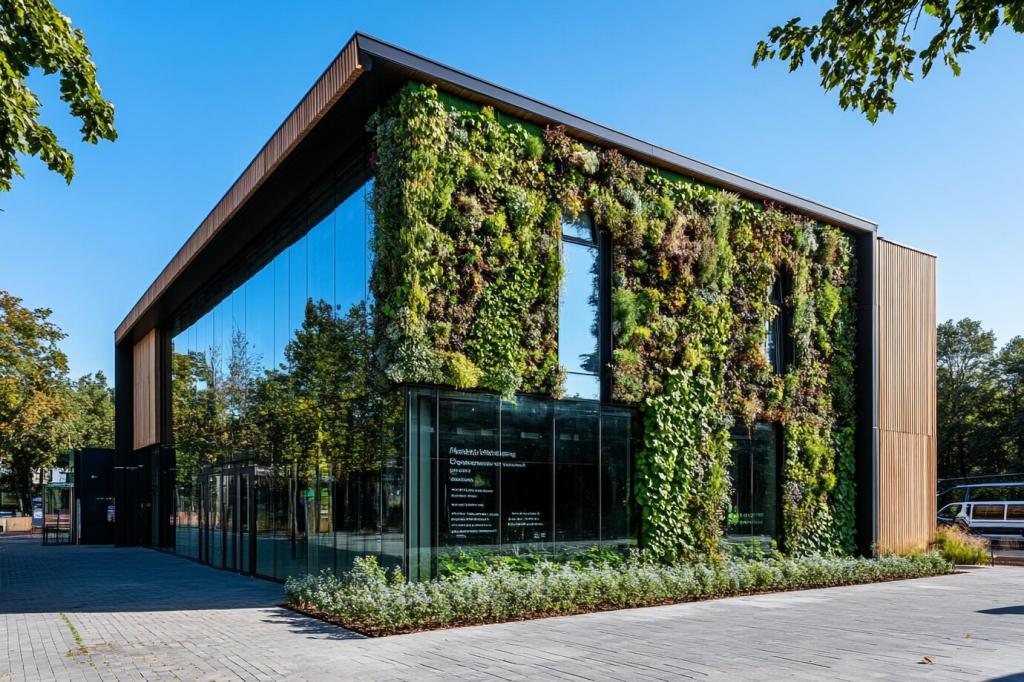
Green walls, garden stairs, wood grains, and framed views regulate stress and spark delight. A pediatric waiting room with a tree canopy mural calmed anxious families. What small biophilic touch changed your space? Post a photo idea and inspire tomorrow’s designers.

Community Co-Design and Access

Host listening sessions, map walking routes, and ensure universal access from the first sketch. A neighborhood clinic co-designed with elders added shaded benches near transit. Tell us how you engage communities authentically, and subscribe to hear upcoming voices from resident design leaders.

Policy, Budgets, and the Long Game

Use energy codes and standards as minimums and certifications as roadmaps, not trophies. LEED, BREEAM, WELL, and Passive House can structure decisions. A charter school pursued a simple energy target and still exceeded expectations. Which framework helps you most? Vote in the comments.

Policy, Budgets, and the Long Game

Model total cost of ownership, factoring maintenance, health, downtime, and carbon. Efficiency hedges against volatile energy prices and climate risk. A building manager shared that fewer breakdowns mattered most. What convinced your CFO? Share a payback story to help others make the case.
Flirtyblog
Privacy Overview

This website uses cookies so that we can provide you with the best user experience possible. Cookie information is stored in your browser and performs functions such as recognising you when you return to our website and helping our team to understand which sections of the website you find most interesting and useful.